Base Year Concept: The Base Year Concept: Understanding Its Importance in Escalation Clauses

The base year acts as a reference point for measuring changes in prices. It should be a year that is free from any significant economic disturbances or abnormal price fluctuations. In order to understand price indices, it is essential to grasp the concept of a base year. They provide insights into inflation, purchasing power, and international comparisons.

  • This is critical in measuring potential growth and keeping track of company profitability.
  • From an economist’s perspective, the base year is crucial because it anchors the price index used to adjust future payments.
  • Similarly, the CPI may not reflect the differences in price levels between urban and rural areas, or between different income groups.
  • It’s a cornerstone for calculating real GDP, which adjusts nominal GDP by removing the effects of price changes.
  • It requires careful consideration of legal, financial, and economic factors to ensure that the contract remains fair and equitable for all parties involved throughout its duration.
  • In this article we will take a closer look at what you should know about the modified gross lease.
  • For instance, a country that has undergone significant economic transformation might choose a more recent base year to better represent its current economic structure.

What is a Modified Gross Lease & How Does It Work?

This helps policymakers to make informed decisions about the economy. By choosing a base year, economists can adjust the values of goods and services in different periods to account for inflation. This helps economists, analysts, and policymakers to identify the trends, patterns, and changes in the economy, which can help them to make informed decisions. The importance of the base year lies in its ability to provide a clear picture of the changes that have occurred in the economy over a specific period. The base year is usually chosen as a representative year, which reflects the economic condition of a country or a region. Nominal value is an important concept in economics and finance.

The Role of Base Year in Stabilizing GDP Comparisons

The base year is the year against which prices are compared, while the current year is the year being measured. Price indices are important indicators in the field of economics as they help in analyzing the changes in prices of goods and services over time. The inflation rate indicates the percentage increase in prices over a specific period, impacting the purchasing power of money and the calculation of Real GDP. The value of an economic variable expressed in current monetary terms, without adjusting for inflation or price changes. With the steady rise in energy prices, tenants who signed leases in subsequent years faced immediate additional charges for utilities, as the base year did not reflect the current energy cost scenario. This formula is not only a reflection of the economic landscape at the time the lease is signed but also a predictor of the financial trajectory of the property’s upkeep.

3.3 The role of the Base year in price Index calculation Additionally, it should reflect the typical consumption patterns and market conditions of the population. The base year is typically chosen based on its stability and representativeness of the economy. Suppose the base year is set as 2010, and the price index for 2015 is calculated to be 125. A price index is a weighted average, meaning that some goods or services may have a more significant influence on the overall index than others. For example, if Country A has a higher price index than Country B, it suggests that goods and services are more expensive in Country A.

Base Year: Base Year Breakdown: Stabilizing Nominal GDP Comparisons

One of the primary applications of a base year is in calculating index numbers, such as the Consumer Price Index (CPI) or stock market indices. By anchoring data to a single point, it eliminates the distortion caused by fluctuating values. This allows for a clear and consistent comparison, making it easier to identify changes and patterns over time.

Nominal changes refer to the actual changes in prices, while real changes refer to the changes in prices adjusted for inflation. By interpreting price indices in terms of inflation, policymakers can make informed decisions about monetary policy, such as adjusting interest rates. Price indices are important indicators of the state of the economy and are used to measure the changes in the prices of goods and services. Price indices are used to measure the changes in prices of goods and services over time. They help in measuring the rate of inflation and deflation, as well as price fluctuations in a specific industry or market. Price indices are an essential tool in understanding the overall changes in prices of goods and services over time.

A long-term lease agreement in the commercial industry might entail a 10-year lease with a 4% escalation each year. The base year typically refers to the first full year of the lease. The company can report a 40% growth in sales from $100,000 to $140,000, but savvy analysts are more interested in the 10% decline in same-store sales. Let’s say that Company A opens 100 more stores in the following year and these stores generate $50,000, but same-store sales decline in value by 10%, from $100,000 to $90,000. In the calculation of comp store sales, the base year represents the starting point for the number of stores and the amount of sales those stores generated.

The concept of a base year is pivotal in various economic and financial contexts, particularly when it comes to escalation clauses in contracts. They provide a common starting point for comparisons and make it possible to see how things have changed over time. To calculate the growth rate for each year, the company divides the sales for that year by the sales in the base year and then multiplies the result by 100.

  • This means that all subsequent years will be compared to the prices of goods and services in that year, providing a comparison of the prices in each year relative to the prices in the base year.
  • The base year acts as a reference point for measuring changes in prices.
  • In 2010, you choose 2010 as the base year, and you calculate the price index for various electronics products.
  • This means that it includes changes in prices over time, which can impact the perceived value of goods and services.
  • Both the above are important indicators in an economy that can be used for measurement of price changes.
  • Entertainment services (including the booming Nollywood film industry) were estimated at 1% of GDP at market prices after the rebasing, while the sub sector was unaccounted for previously.
  • Choosing an appropriate base year can make the difference between an accurate or inaccurate forecast.

The selection of an appropriate base year is not merely a technical formality but a strategic decision that can significantly impact the financial health of a contract over its lifespan. It serves as a reference point from which future financial performance is measured and compared. It ensures that all parties have a clear understanding of the financial implications of their agreement and can plan accordingly. However, different clauses can reference different base years, especially in complex contracts where various services or costs escalate at different rates or times. In some cases, the parties may agree to set a different year as the base year for various strategic reasons, such as anticipated changes in the market or tax implications. Understanding the nuances of the base year formula is essential for both landlords and tenants as it directly impacts the financial obligations of both parties throughout the lease term.

By taking into account the effects of inflation and deflation, nominal value provides a more accurate representation of the current value of goods and services. For example, if the nominal value of the GDP increases, but the inflation rate is also high, the real value of the GDP may not have actually increased. This allows for a more accurate analysis of the current state of an economy. Through the use of different perspectives, we will explore how nominal value can be used to provide a more accurate analysis of the economy.

For example, a company established in 2021 could use that year to measure sales growth moving forward. In commercial real estate, the base year is used to determine the tenant’s responsibility for certain operating expenses over the term of the lease. New stores have higher growth rates because they are starting from zero, and each new store sale is an incremental sale. Horizontal analysis is fairly straightforward, especially for public companies that have to make these year-over-year financial numbers public each quarter. Investors can perform a base-year analysis of a company’s financial statements to determine whether or not its bottom line is growing consistently.

In general, the choice of base year should be made with care in order to ensure that it provides an accurate benchmark for comparison. Using a base year that is too far in the past can make it difficult to see current trends, while using a base year that is too recent can make it difficult to see longer-term trends. Choosing the right base year is important because it can affect the results of an analysis. Techniques like software industry data normalization help reduce inconsistent variables’ impact before drawing conclusions from multi-dimensional datasets. It should be balanced such that it correctly represents both operational performance metrics and favorable market conditions.

This is particularly useful when evaluating investments that have been made at different times. By using a common base year, investors can compare the real value of different assets or investments. This is because it adjusts for changes in the value of money over time, which can be misleading if not accounted for. Secondly, it helps to identify the sectors of the economy that are growing faster than others.

Types of Price Indices

The NAV of the units issued under the scheme may be affected, inter-alia by changes in the interest rates, trading volumes, settlement periods, transfer procedures and performance of individual securities forming part of the Mutual Fund. Mutual Funds are subject to market risks, including loss of principal amount and Investor should read all Scheme/Offer related documents carefully. (iii) carry independent research or analysis, including on any Mutual Fund schemes or other investments; and provide any guarantee of return on investment. The information contained in this article is for general informational purposes only and does not constitute any financial advice.

Inflation can have significant impacts on general ledger the economy, such as reducing purchasing power and increasing the cost of borrowing. For example, if the price of food has increased by 10%, while the price of clothing has decreased by 5%, it means that the relative price of food has increased compared to clothing. This approach can provide insights into the changes in the structure of the economy, and how different sectors are performing. The base year is usually set as 100, and the current period is compared to the base year.

Furthermore, external investors into an economy can make more optimal decisions on capital flows whether by portfolio investment or FDI. The more out of date a country’s base year, the more inaccurate are estimates of GDP and the lower a country’s score in the World Economics GDP Data Quality Ratings. In the case of Nigeria, the number of industries measured by the statistics agency increased to 46 from 33 and the weighting of the different sectors changes. For some rapidly changing products (such as the smartphone in recent years) rapid technological change and relative price falls make any kind of comparison fraught with difficulty. In the case of many countries, however, the failure to update a base year which involves in-depth surveys of the structure of an economy, is due to lack of resources in terms of the statistical capacity of national statistics offices. Subsequently the CSO decided that the National Sample Survey (NSS) figures on the workforce size were more accurate and hence, the base year would change every five years when the NSS conducted such survey.

For example, if the nominal value of the GDP increases from one year to the next, it may be an indication of economic growth. This means that it includes changes in prices over time, which can impact the perceived value of goods and services. Both the above are important indicators in an economy that can be used for measurement of price changes. Therefore it is necessary to assess the inflation rate of then through calculation of consumer price index. The base year of consumer price index data is a reference of benchmark against which the change in price for current year is determined.

Growth analysis is a commonly used way to describe company performance, particularly for sales. The base year can also describe the starting point from a point of growth or a baseline for calculating same-store sales. As an Investopedia fact checker since 2020, he has validated over 1,100 articles on a wide range of financial and investment topics.

In this section, we will delve deeper into the importance of understanding nominal value and its significance in analyzing economic growth. It gives an idea about inflation level of an economy, and design policies and adjustments to ensure financial and economic stability. A market basket comprises a varied set of goods and services that most households use, and the change in the prices of which directly affects an economy every year.

How do you calculate debt and equity ratios in the cost of capital?

equity ratio formula

In our modeling exercise, we’ll forecast the shareholders’ equity balance of a hypothetical company for fiscal years 2021 and 2022. The shareholders equity ratio, or “equity ratio”, is a method to ensure the amount of leverage used to fund the operations of a company is reasonable. If shareholders’ equity is positive, that indicates the company has enough assets to cover its liabilities. But if it’s negative, that means its debt and debt-like obligations outnumber its assets.

The debt-to-equity (D/E) ratio is used to evaluate a company’s financial leverage and is calculated by dividing a company’s total liabilities by its shareholder equity. It is a measure of the degree to which a company is financing its operations with debt rather than its own resources. The shareholder equity ratio is expressed as a percentage and calculated by dividing total shareholders’ equity by the total assets of the company. The result represents the amount of the assets on which shareholders have a residual claim. The figures used to calculate the ratio are recorded on the company balance sheet. The shareholders equity ratio measures the proportion of a company’s total equity to its total assets on its balance sheet.

  1. Shareholders’ equity includes Equity share capital, retained earnings, treasury stock, etc., and Total assets are the sum of all the non-current and current assets of the company.
  2. The shareholder equity ratio is expressed as a percentage and calculated by dividing total shareholders’ equity by the total assets of the company.
  3. The equity ratio is the solvency ratio that helps measure the value of the assets financed using the owner’s equity.
  4. It indicates the proportion of the owner’s fund to the total fund invested in the business.

Equity ratio formula

equity ratio formula

Shareholders do not explicitly demand a certain rate on their capital in the way bondholders or other creditors do; common stock does not have a required interest rate. What counts as a “good” debt-to-equity (D/E) ratio will depend on the nature of the business and its industry. Generally speaking, a D/E ratio below 1 would be seen as relatively safe, whereas values of 2 or higher might be considered risky. Companies in some industries, such as utilities, consumer staples, and banking, typically have relatively high D/E ratios. The debt-to-equity ratio is most useful when used to compare direct competitors. If a company’s D/E ratio significantly exceeds those of others in its industry, then its stock could be more risky.

equity ratio formula

How Do You Calculate Equity in a Private Company?

The formula to calculate shareholders equity is equal to the difference between total assets and total liabilities. In other words, all of the assets and equity reported on the balance sheet are included in the equity ratio calculation. Shareholders’ equity includes Equity share capital, retained earnings, treasury stock, etc., and Total assets are the sum of all the non-current and current assets of the company. It should be equal to the sum of shareholders’ equity and the total liabilities. The equity ratio is a financial ratio indicating the relative proportion of equity used to finance a company’s assets.

Equity Ratio calculates the proportion of total assets financed by the shareholders compared to the creditors. Generally, a higher ratio is preferred in the company as there is safety in paying debt and other liabilities. If more financing is done through equity, there is no liability for paying interest. The formula for calculating the equity ratio is equal to shareholders’ equity divided by the difference between total assets and intangible assets. The equity ratio calculates the proportion of a company’s total assets financed using capital provided by shareholders. The second component inversely shows how leveraged the company is with debt.

Short-term debt also increases a company’s leverage, of course, but because these liabilities must be paid in a year or less, they aren’t as risky. Changes in long-term debt and assets tend to affect the D/E ratio the most because the numbers involved tend to be larger than for short-term debt and short-term assets. If investors want to evaluate a company’s short-term leverage and its ability to meet debt obligations that must be paid over a year or less, they can use other ratios. Company or shareholders’ equity is equal to a firm’s total assets minus its total liabilities.

How Do Stock Buybacks Impact Shareholders Equity?

As such, many investors view companies with negative equity as risky or unsafe. However, many individuals use it in conjunction with other financial metrics to gauge the soundness of a company. When it is used with other tools, an investor can accurately analyze the health of an organization. Hostess’s equity ratio is 0.40 or 40%, meaning that the company has financed 40% of its assets using equity and the other 60% with debt. Companies can use WACC to determine the feasibility of starting or continuing a project.

Shareholders do expect a return, however, and if the company fails to provide it, shareholders dump the stock and harm the company’s value. Thus, the cost of equity is the required return necessary to satisfy equity investors. A steadily rising D/E ratio may make it harder for a company to obtain xero for dummies cheat sheet financing in the future. The growing reliance on debt could eventually lead to difficulties in servicing the company’s current loan obligations.

Secured creditors have the first priority because their debts were collateralized with assets that can now be sold in order to repay them. Average ratios can be regarded as “good” and “bad” and differ considerably from sector to sector. Moreover, a return on equity ratio is considered good if the return to equity ratio is 15% to 20%. Typically, a business aims to increase an equity ratio of about 0.5 or 50%. It indicates the proportion of the owner’s fund to the total fund invested in the business. Traditionally it is believed that the higher the proportion of the owner’s fund the lower the degree of risk.

Still, as a general rule of thumb, most companies aim for an equity ratio of around 50%. The guidelines for what constitutes a “good” proprietary ratio are industry-specific and are also affected by the company’s fundamentals. Intangible assets such as goodwill are normally excluded from the ratio, as reflected in the formula. Here, we’ll assume $25,000 in new equity was raised from issuing 1,000 shares at $25.00 per share, but at a par value of $1.00. In recent years, more companies have been increasingly inclined to participate in share buyback programs, rather than issuing dividends. Adam Hayes, Ph.D., CFA, is a financial writer with 15+ years Wall Street experience as a derivatives trader.

A company’s negative equity that remains prolonged can amount to balance sheet insolvency. There is a clear distinction between the book value of equity recorded on the balance sheet and the market value of equity according to the publicly traded stock market. From the viewpoint of shareholders, treasury stock is a discretionary decision made by management to indirectly compensate equity holders. Another benefit of share buybacks is that such corporate actions can send a positive signal to the market, much like dividends, without the obligation to maintain the repurchases (e.g. a one-time repurchase). The “Treasury Stock” line item refers to shares previously issued by the company that were later repurchased in the open market or directly from shareholders.

Tim is looking for additional financing to help grow the company, so he talks to his business partners about financing options. Tim’s total assets are reported at $150,000 and his total liabilities are $50,000. Based on the accounting equation, we can assume the total equityis $100,000. Higher investment levels by shareholders shows potential shareholders that the company is worth investing in since so many investors are willing to finance the company. A higher ratio also shows potential creditors that the company is more sustainable and lisa baca bookkeeping less risky to lend future loans.

What is the Difference Between Bookkeeping and Accounting

what is the difference between a bookkeeper and an accountant

At Taxfyle, we connect small businesses with licensed, experienced CPAs or EAs in the US. We handle the hard part of finding the right tax professional by matching you with a Pro who has the right experience to meet your unique needs and will manage your bookkeeping and file taxes for you. Many experienced bookkeepers are retiring, creating a shortage of skilled professionals.

what is the difference between a bookkeeper and an accountant

How to Start a Bookkeeping Business in…

  • They are responsible for tracking the daily transactions and making a record of these transactions.
  • Today, many ecommerce accounting software programs include helpful accounts receivable functions.
  • That’s why it’s so important to understand the nuances between bookkeeping and accounting.
  • Accountants are often involved in more complex financial tasks, such as financial analysis, budgeting, forecasting, and preparing financial statements.
  • Take your business to new heights with faster cash flow and clear financial insights —all with a free Novo account.
  • This ensures your hardworking team members get paid on time and have their taxes taken out.
  • All sales and purchases made by your business need to be recorded in the ledger, and certain items need supporting documents.

Manage deductions, track GST, invite collaborators and never second guess payroll calculations again. And, since having a good amount of choices is ideal, be sure to check out Webgility software accounting services, too. And when tax season rolls around, and you file your tax returns, make sure they’re correct and complete. This extremely helpful document keeps track of cash and cash equivalents coming into your online store and going out, too. The statement of cash flows is especially important if you engage with any financing activities, such as investments or loans.

Creating A Financial Roadmap With A Chart of Accounts

  • These areas define the roles and functions of bookkeeping vs accounting and show why they’re both essential to the business.
  • For the past 52 years, Harold Averkamp (CPA, MBA) has worked as an accounting supervisor, manager, consultant, university instructor, and innovator in teaching accounting online.
  • The truth is that education requirements vary for both bookkeepers and accountants.
  • For example, accountants with sufficient experience and education can obtain the title of Certified Public Accountant (CPA), one of the most common types of accounting designations.
  • Bookkeepers focus on day-to-day financial recording, while accountants give a big-picture view of a company’s finances.
  • Maintaining a general ledger is one of the main components of bookkeeping.

The reporting gives a snapshot of your business’s overall performance and any current debts or shortfalls. Cash-basis accounting records revenue when you bring it in and expenses when you pay them, regardless of when the transactions occurred. Financial accounting summarises and reports all the transactions for your business. It’s primarily used to give external stakeholders a snapshot of the financial health and profitability of your business.

Should I get an online accountant for my small business?

Their bookkeeping offerings consist of a software platform that you connect your accounts to, with either Live Assisted or Full-Service Bookkeeping. With Live Assisted, you’ll be able to connect with a bookkeeper to ask questions and receive guidance on how to do your books yourself. Full-service bookkeeping will match you with a bookkeeper https://www.bookstime.com/ who does your books for you, using the Quickbooks platform. Accounting is a high-level process that uses financial data compiled by a bookkeeper or business owner to produce financial models. Accounting is not only the systematic recording of financial data but also the analysis, interpretation, and presentation of this data.

what is the difference between a bookkeeper and an accountant

  • Nearly all of the top 10 most valuable skills for the 2030 market in the US and the UK are workplace skills, according to Pearson and Nester [2].
  • If you are proficient and comfortable using mathematics and computing figures, plus punctual, organized, and detail-oriented, it is not hard to learn how to be a bookkeeper.
  • Rarely does a bookkeeper work on one big project for an eight-hour shift; instead, a typical workday involves juggling five or six smaller jobs.
  • This function is especially useful given the COVID-19 pandemic that has forced many people and businesses to work from home remotely.
  • FreshBooks can help you find a qualified and certified public accountant in your area who can help small businesses with their accounting needs.
  • Give your team access to a catalog of 8,000+ engaging courses and hands-on Guided Projects to help them develop impactful skills.

Hard skills refer to technical skills, and represent the specialized knowledge you bring to particular roles. Soft skills, on the other hand, refer to workplace skills and represent how you approach your work. If you know you’ll need a professional to help you with these tasks, outsource what is a bookkeeper these jobs to third party companies. After all, these individuals are well-versed in these areas and trained to complete the ecommerce accounting and bookkeeping tasks for you. The balance sheet is what keeps track of your business’ wealth over the lifetime of the company.

If you’re searching for accounting software that’s user-friendly, full of smart features, and scales with your business, Quickbooks is a great option. Accountants need to have a bachelor’s degree but may also have a master’s degree. Many tax accountants also have a Certified Public Accountant (CPA) license. An Enrolled Agent (EA) is a specialized type of accountant that can advocate on behalf of your business when you have issues with the IRS.

what is the difference between a bookkeeper and an accountant

  • However, bookkeepers will face pressure from automation and technology that will reduce the demand for such workers.
  • There are critical differences in job growth and salaries between the two.
  • To become one, you have to either have worked at the IRS or pass an EA examination.
  • Bookkeepers don’t necessarily need higher education in order to work in their field while accountants can be more specialized in their training.
  • Here are some of the best online bookkeeping software you can consider for this purpose.
  • If you have employees, you need to keep track of payroll processing and payroll taxes.

Best 6 Free Accounting Software for Small Businesses 2024 – Startups.co.uk

Best 6 Free Accounting Software for Small Businesses 2024.

Posted: Mon, 18 Dec 2023 08:00:00 GMT [source]

QuickBooks Online Review 2024: Features, Pros & Cons

quickbooks online vs. desktop

Fit Small Business notes that QBO offers project management features and tends to be more affordable than QuickBooks Desktop for teams needing multiple logins. This is a big plus for growing businesses that need to give access to several employees without breaking the bank on software licenses. These include the ability to track raw materials and finished products and automate order cash basis accounting: explain examples, contrast with accrual management, among other functions. It also has barcode scanning capabilities — business owners can download the QuickBooks Desktop mobile app and use their mobile device as a scanner.

Pushing the Boundaries of Finance: How Pushkin Industries Revolutionized Their Accounting with FinOptimal

As Zapier points out, it’s accessible from any device with an internet connection, a significant advantage over Desktop’s local installation. This cloud-based approach simplifies things for businesses that need access to financial data on the go or have teams working remotely. Some advanced features found in the Desktop version are simplified or unavailable in Online. Access your financial data from anywhere with an internet connection—laptop, tablet, or phone. This is great for entrepreneurs on the go or businesses with remote how to amend a federal tax return teams.

  1. QuickBooks Online operates on a subscription model, spreading the cost out over time.
  2. Each user has their own login credentials, which can be customized to limit access to sensitive information.
  3. The QuickBooks Desktop Premier Plus plan is particularly useful for business that want industry-specific features.
  4. This seamless process keeps your software current and performing well.
  5. Sign up for Lab Report to get the latest reviews and top product advice delivered right to your inbox.

Cloud Access vs Local Installation

Most small to midsize businesses that want a cloud-based solution. Many, or all, of the products featured on this page are from our advertising partners who compensate us when you take certain actions on our website or click to take an action on their website. With QuickBooks Online, you also get the latest security capabilities. Know that your data is protected without downloading and installing product updates. You don’t have to worry about losing everything in a fire or an unforeseen event.

The QuickBooks mobile app is also available for free and lets you manage your account on the go. Given Intuit QuickBooks Online’s high price, you need to be committed to using it conscientiously do luxury goods have elastic demand and comprehensively. In particular, its inventory and reporting tools are in a class above others. QuickBooks Online is an Editors’ Choice winner alongside FreshBooks, which isn’t quite as thorough or flexible but better caters to service-based businesses.

quickbooks online vs. desktop

Performance, Scalability, and User Experience: Which QuickBooks Version Comes Out on Top?

We believe everyone should be able to make financial decisions with confidence. PCMag.com is a leading authority on technology, delivering lab-based, independent reviews of the latest products and services. Our expert industry analysis and practical solutions help you make better buying decisions and get more from technology.

Probably not, unless your business absolutely needs advanced inventory management features, barcode scanning, or assembly builds. Chances are your team will be happier sticking with QuickBooks Online. Not only is it the newer tool, but it also seems to be the focus in terms of update frequency, development, and marketing. QuickBooks Online is simply easier to learn, provides a detailed onboarding process, and is very intuitive. If your accounting software doesn’t register changes in real time, it could lead to costly delays. All you need is your account information, and you can access your QuickBooks details on any device with an internet connection.

And if data analysis is an important part of growing your business, QuickBooks Desktop is a solid pick. It includes 100+ reports, while QuickBooks Online Simple Start includes around 40. The Desktop Premier edition escalates to 150+ reports, including industry-specific reports for general contractors, manufacturers and wholesalers, nonprofits, and retailers. If you’re searching for accounting software that’s user-friendly, full of smart features, and scales with your business, Quickbooks is a great option.

Speaking of extra fees, QuickBooks Desktop also charges for e-commerce app integration, invoice-based payment acceptance, and online data hosting. If you choose QuickBooks Desktop Pro Plus, you’ll also need to pay extra if you want to access customer service via live chat. Notably, only QuickBooks Desktop Enterprise includes 24/7 customer service. Pro Plus and Premier Plus limit customer service hours to just 12 hours a day, weekdays only. QuickBooks Online has been part of the Intuit accounting software family for a few decades now.

Trust Accounting Suite

yardi accounting software

Yardi Systems is committed to meeting the training needs of your business and offers a wide variety of cost-effective learning management resources to suit the individual needs of your employees. We offer both onsite and online training, classroom training, tailored training manuals, user conferences and more. Yardi is committed to supporting clients with superior services. We view our relationships with our clients as partnerships, to make sure we continue to respond to evolving needs and deliver the best solutions in the industry.

We can operate like an A+ property but still give that smaller hometown service. Track costs including budgets, contracts, payments and retention. Manage your contacts, commitments and cash flow to stay on budget. Although there isn’t a significant difference in features between Yardi Breeze and Appfolio, if you manage student housing properties, Appfolio is the clear winner.

We have multiple options for all portfolio types and sizes, from large multinational enterprises to small and midsize holdings. Yardi offers unrivaled solutions for residential property management, built into a single, mobile software platform. Yardi Systems is the property management https://www.bookkeeping-reviews.com/ software leader for real estate clients worldwide. Yardi provides integrated property management software and investment management solutions for all real estate verticals allowing owners, managers, investors and other stakeholders access to information specific to their needs.

yardi accounting software

Voyager automates workflows and provides system-wide transparency that enables you to work more productively and collaboratively than ever before. Using any browser and mobile device, Voyager gives you instant access to your data. And as a SaaS platform, Voyager frees you from managing your software — so you can focus on your business.

What is Yardi? Property Management Software Explained

Eliminate paperwork and reduce costs with an online invoice approval workflow. See our overall favorites, or choose a specific type of https://www.quick-bookkeeping.net/ software to find the best options for you. Finally, the Premium plan starts at $460 per month and can also manage up to $5,000 units.

yardi accounting software

This would likely be report customization – though I could not say if that has more to do with our system administrators than Yardi itself, it can be time-consuming and (probably) costly. Ease of use is at the top of my list regarding Yardi Voyager … Our company moved over to Yardi from another Real Estate Management Software about 12 years ago bringing us into the 21st century … I love the ability to scan invoice images so when you need to refer to it later, it is at your fingertips.

Built-in accounting

Current Yardi clients are invited to browse class offerings and course descriptions (including prerequisites) on Client Central. We offer several interface solutions to provide our customers with streamlined workflows between Yardi software and certain third-party vendors. Standard interfaces for Yardi Voyager are available to customers free of charge, and requests for new or enhanced interfaces are always welcome. Yardi Breeze Premier offers a handful of plugins like utility billing and maintenance request tracking. For full-fledged customization, and complete access to their library of hundreds of API add-ons, Voyager is your go-to.

  1. In addition to our own in-house Professional Services Group, Yardi works with many independent consultants all over the world who can also assist you with implementation and a variety of other services for your Yardi software.
  2. Markets we serve include commercial, multifamily, single family housing, self storage, student housing, senior housing, coworking, affordable housing, PHA, military housing, airports and parks and recreation.
  3. We can operate like an A+ property but still give that smaller hometown service.
  4. Streamline management of oil and gas specialty assets, down to the well level.

If you want all the features of a property management system while maintaining your accounting in QuickBooks Online, then consider Properbooks. Another option for businesses that are partial to QuickBooks products is to use QuickBooks Pro (also known as QuickBooks Desktop). Unless you choose a remote hosting option, however, you will lose the cloud-based access QuickBooks Online users enjoy. Speed up rent collection, eliminate bank runs and streamline vendor payments with payment processing software for commercial management. Now you can have best-of-breed Senior Living software and the simplicity of contracting with a sole-source vendor.

You could never get two different reports to give you the same answer. Even the numbers on their “Support” site were either disconnected or unanswered. Start by deciding what you need from your property management software.

Commercial Property Management Software

By far, the biggest improvement that we have now is rent collection. We are officially paperless, and all payments go through RentCafe. We started out as a small software startup focused on quality software and customer satisfaction.

Choosing the right property management software to organize, optimize and grow your business is a big decision, but it shouldn’t be overwhelming. Use the property management software checklist to help you make the right decision when reviewing the solutions available to you from any real estate technology provider. Starting at $100 per month for up to 100 residential units, Yardi Breeze is a great property management accounting software choice for midsize property management companies. Even the smallest property management companies have a lot to manage — collecting rent, managing lease agreements, fielding maintenance requests and more. Therefore, busy property managers need accounting software that goes beyond accounting.

Do you work for Yardi?

We also offer customizable solutions like mobile apps and websites for your properties. Our continued innovation wouldn’t be possible without feedback from our clients. Appfolio allows you to manage rents and vacancies by the bed without changing the lease for all the residents in a unit — something our other software recommendations don’t do. Properbooks’ affordable $25 monthly subscription cost allows five users to access the system, allowing your team to do their work without having full access to your accounting information.

Streamline management of oil and gas specialty assets, down to the well level. Save staff time and ensure compliance with your fiduciary obligations by automating https://www.online-accounting.net/ insurance, tax payments, fee and market value calculations, annual reviews and reports. The Yardi Trust Accounting Suite is built into the Yardi Voyager platform.

How to Calculate Total Manufacturing Cost

Before work hits the production line, one must know how to calculate manufacturing cost. We’ll get to the formula in a little bit, but first let’s set up the building blocks of understanding exactly what is necessary for tracking overhead costs and why. This includes understanding what contributes to expenses rather than overhead or operational costs. Bort explains to you that it costs him a total of $5 to manufacture a single umbrella. He is confused as to why marking up his umbrellas $2 over the cost of production isn’t earning him any profit. Step 1 is the most important, so make sure to include all of your indirect costs.

  1. Then, each cost center charges for goods and services it receives from other cost centers according to the amounts each contributed to overhead.
  2. Utility overhead can vary based on production, with costs lower with slowed production; ramping up when production does.
  3. This analysis helps companies identify inefficiencies in their production processes and make necessary adjustments to improve operations.

Companies discover these indirect labor costs by identifying and assigning costs to overhead activities and assigning those costs to the product. That means tracking the time spent on those employees working, but not directly involved in the manufacturing process. The first step toward achieving these benefits is to know the different types of manufacturing costs.

Manufacturing Overhead Definition, Formula & Types

ProjectManager is award-winning project management software that tracks manufacturing costs in real time. Our live dashboard automatically captures key performance indicators (KPIs) including costs, showing your planned costs against your actual costs in an easy-to-read graph. Unlike lightweight software solutions, our real-time dashboard requires no lengthy setup. Just toggle over to the dashboard whenever you want a high-level overview of your production. Each of these figures must be reported on both the balance sheet and income statement.

These costs are spread over the entire inventory since it is too difficult to track the use of these indirect materials. Being able to track those costs is important and project management software can help. ProjectManager is online work and project management software that delivers real-time data to monitor costs as they happen. To calculate manufacturing overhead, one needs to identify and add all indirect costs of production.

Applied Manufacturing Overhead Formula

On the other hand, a higher rate may indicate a lagging production process. In this case, for every product you manufacture, you allocate $25 in manufacturing overhead costs. Such variable overhead costs include shipping fees, bills for using the machinery, advertising campaigns, and other expenses directly affected by the scale of manufacturing. Tracking manufacturing overhead is essential because it accounts for a significant portion of its overall costs.

How to Calculate Manufacturing Overhead Costs Step by Step

A good way to think about which costs go in to determining manufacturing overhead is to look at the costs that are incurred to ensure that the manufacturing process can occur. Basically, you need a building, you need to insure that building, you need to take care of that building and you need to keep the utilities on in that building. All of those costs what to post on instagram must be considered when determining manufacturing overhead. Added together, Fran’s Furnishings had a total manufacturing cost of $1,645,000. You would have to do further analysis of this number to determine whether the company is making a profit or needs to reduce costs. Manufacturing overhead is an essential part of running a manufacturing unit.

This data is also shared with other features, such as our dashboards and reports. We understand what direct material costs are so now it’s time to talk about the formula used to calculate them. Calculate direct materials costs when doing a physical inventory and adding up all the opening and closing direct materials for some time.

These expenses can include rent, utility bills, insurance, equipment maintenance and administrative costs. These costs are all incurred through the manufacturing process even though they have nothing to do with https://www.wave-accounting.net/ the materials that are used or the wages paid to the manufacturing employees. These indirect costs include rent, property tax, equipment depreciation, costs of maintanance and repair, salaries and wages.

Therefore, if it’s not directly related to the factory where production happens, it’s not part of the product cost and also not part of overhead. Then at the end, you can test your knowledge with a practice bookkeeping question so you can grasp the practical basics of calculating your own indirect costs. These costs must be included in the stock valuation of finished goods and work in progress. Both COGS and the inventory value must be reported on the income statement and the balance sheet. For example, you can use the number of hours worked or the number of hours machinery was used as a basis for calculating your allocated manufacturing overhead. To calculate your allocated manufacturing overhead, start by determining the allocation base, which works like a unit of measurement.

Of course, it’s not going to be a core piece of information for your running of the business, but the effects on your profit margins will be there. First, of course, we are talking here only about indirect costs linked to manufacturing (so forget marketing, sales, or administration). Understanding manufacturing overhead is essential for any business, so it’s well worth learning how to use this formula in budgeting. You’ll then be able to remove any unnecessary costs for future revenue growth.

Manufacturing overhead costs are indirectly incurred during the production process. Examples include property tax, personnel salaries and wages, depreciation, costs of repair and maintance, electricity and water bills. Manufacturing overhead – Discussed above, manufacturing overhead is all of your indirect costs calculated and properly allocated. These would include building rent or mortgage, property taxes, maintenance supplies such as paper products, and oils or lubricants for manufacturing equipment. The overhead percentage rate is calculated by adding all of your indirect costs and then dividing them by a designated measurement such as labor costs, sales totals, or machine hours.

Using the general manufacturing costs exclusively gives you an incorrect and incomplete view of your business. This means 16% of your monthly revenue will go toward your company’s overhead costs. Direct labor refers to employees involved in the actual production of a product. This would include assembly line workers who put together the final product and machine operators who run equipment that creates components of the final product. Indirect labor refers to workers who do not work directly on the production of the final product. Using the given information, we will calculate the manufacturing overhead of Samsung for the year 2022.

Manufacturing overhead is the total indirect costs incurred during the production process. Notably, manufacturing overhead costs cannot be linked directly to the products. As such, direct labor and material costs are not factored in when calculating total manufacturing overhead. Calculating overhead costs helps determine the cost of production for a single unit.

Adding manufacturing overhead expenses to the total costs of products you sell provides a more accurate picture of how to price your goods for consumers. If you only take direct costs into account and do not factor in overhead, you’re more likely to underprice your products and decrease your profit margin overall. All the items in the list above are related to the manufacturing function of the business. These costs exclude variable costs required to manufacture products, such as direct materials and direct labor.

Contribution Margin Ratio Revenue After Variable Costs

Conversely, a lower ratio might require maintaining or increasing prices to preserve margins. Striking this balance demands a deep understanding of market dynamics and consumer behavior to align pricing decisions with broader business objectives. Several factors affect the contribution margin ratio, shaping a product’s profitability. Understanding these elements helps businesses enhance financial performance. The product revenue and number of products sold can be divided to determine the selling price per unit, which is $50.00 per product.

So, what are the takeaways about contribution margins?

This can be a valuable tool for understanding how to price your products to ensure your business can pay its fixed costs, such as salaries and office rent, and still generate a profit. As mentioned above, the contribution margin is nothing but the sales revenue minus total variable costs. Thus, the following structure of the contribution margin income statement will help you to understand the contribution margin formula. Let’s examine how all three approaches convey the same financial performance, although represented somewhat differently. This demonstrates that, for every Cardinal model they sell, they will have \(\$60\) to contribute toward covering fixed costs and, if there is any left, toward profit.

The ratio is also useful for determining the profits that will arise from various sales levels (see the following example). The break-even point in units is calculated by dividing total fixed costs by the contribution margin per unit. For example, if fixed costs are $10,000 and the contribution margin per unit is $40, 250 units must be sold to break even. This insight helps businesses set realistic sales targets and evaluate how changes in costs or strategies impact profitability. Once you have calculated the total variable cost, the next step is to calculate the contribution margin. The contribution margin is the difference between total sales revenue and the variable cost of producing a given level of output.

Therefore, it is not advised to continue selling your product if your contribution margin ratio is too low or negative. This is because it would be quite challenging for your business to earn profits over the long-term. The contribution margin ratio is also known as the profit volume ratio. This is because it indicates the rate do contractors earn more than full-time employees dice com career advice of profitability of your business.

How to Calculate the Contribution Margin Ratio

Contribution Margin refers to the amount of money remaining to cover the fixed cost of your business. That is, it refers to the additional money that your business generates after deducting the variable costs of manufacturing your products. That can help transform your labor costs from a variable expense to a fixed expense and allow you to keep those expenses under tighter control. As a result, your variable expenses will go down and your contribution margin ratio will go up. Once you know that you have a net loss on your hands, you can use contribution margin ratio to figure out what you need to do to break even. But you could also increase sales by $200,000 without increasing variable expenses.

Management can also use the CM ratio to find inefficient processes that need improvement. To calculate the contribution margin that is used in the numerator in the preceding calculation, subtract all variable expenses from sales. Use contribution margin alongside gross profit margin, your balance sheet, and other financial metrics and analyses.

However, this strategy could ultimately backfire, and hurt profits if customers are unwilling to pay the higher price. Investors and analysts may also attempt to calculate the contribution margin figure for a company’s blockbuster products. For instance, a beverage company may have 15 different products but the bulk of its profits may come from one specific beverage. Striking a balance is essential for keeping investors and customers happy for the long-term success of a business. However, they will play an important part in calculating the net income formula.

Everything You Need To Master Financial Modeling

The total margin generated by an entity represents the total earnings available to pay for fixed expenses and generate a profit. When used on an individual unit sale, the ratio expresses the proportion of profit generated on that specific sale. The contribution margin ratio is a valuable tool for developing pricing strategies. By identifying the portion of revenue exceeding variable costs, businesses can set prices that maximize profitability while staying competitive.

How to Calculate Contribution Margin?

  • Investors and analysts may also attempt to calculate the contribution margin figure for a company’s blockbuster products.
  • He also has several fixed costs like employee labor and truck license fees.
  • This calculation reveals the sales target where total revenues equal total costs, resulting in neither profit nor loss.
  • Fixed costs are costs that are incurred independent of how much is sold or produced.
  • Thus, the following structure of the contribution margin income statement will help you to understand the contribution margin formula.

In the Dobson Books Company example, the total variable costs of selling $200,000 worth of books were $80,000. Remember, the per-unit variable cost of producing a single unit of your product in a particular production schedule remains constant. Using this contribution margin format makes it easy to see the impact of changing sales volume on operating income. Fixed costs remained unchanged; however, as more units are produced and sold, more of the per-unit sales price is available to contribute to the company’s net income. Direct materials monthly balance sheet forecast report are often typical variable costs, because you normally use more direct materials when you produce more items.

Fixed Costs vs. Variable Costs

The Contribution Margin Ratio is the product revenue remaining after deducting all variable costs, expressed on a per-unit basis. The fixed costs of $10 million are not included in the formula, however, it is important to make sure the CM dollars are greater than the fixed costs, otherwise, the company is not profitable. A company has revenues of $50 million, the cost of goods sold is $20 million, marketing is $5 million, product delivery fees are $5 million, and fixed costs are $10 million. In particular, the use-case of the contribution margin is most practical for companies in setting prices on their products and services appropriately to optimize their revenue growth and profitability potential. While there are plenty of profitability metrics—ranging from the gross margin down to the net profit margin—the contribution margin metric stands out for the analysis of a specific product or service.

While contribution margin is expressed in a dollar amount, the contribution margin ratio is the value of a company’s sales minus its variable costs, expressed as a percentage of sales. However, the contribution margin ratio won’t paint a complete picture of overall product or company profitability. For example, if a product sells for $100 with variable costs of $60, the contribution margin is $40 ($100 – $60).

If total sales revenue is $1,000, the contribution margin ratio is 40% ($400 contribution margin / $1,000 sales revenue). This means 40% of each sales dollar is available to cover fixed costs and profits. The contribution margin ratio measures the percentage of sales revenue available to cover fixed costs and contribute to profit. It is calculated by dividing the contribution margin (sales revenue minus variable costs) by total sales revenue. Expressed as a percentage, it provides a clear view of product or service profitability. At a contribution margin ratio of \(80\%\), approximately \(\$0.80\) of each sales dollar generated by the sale of a Blue Jay Model is available to cover fixed expenses and contribute to profit.

  • It is considered a managerial ratio because companies rarely report margins to the public.
  • However, the contribution margin ratio won’t paint a complete picture of overall product or company profitability.
  • The concept of this equation relies on the difference between fixed and variable costs.
  • Companies may have significant fixed costs that need to be factored in.
  • Thus, the contribution margin ratio expresses the relationship between the change in your sales volume and profit.

Contribution Margin vs. Gross Margin: What is the Difference?

The ratio can help businesses choose a pricing strategy that makes sure sales cover variable costs, with enough left over to contribute to both fixed expenses and profits. It can also be an invaluable tool for deciding which products may have the highest profitability, particularly when those products use equivalent what is process costing what it is and why its important resources. In general, the higher the contribution margin ratio, the better, with negative numbers indicating a loss on every unit produced. While the contribution margin ratio is a percentage, actual contribution margin dollars increase with higher unit sales if the ratio remains constant. Selling more units generates greater total contribution margin dollars, which can cover fixed costs and boost profitability.

Fixed costs vs. variable costs

Gross profit margin is the difference between your sales revenue and the cost of goods sold. Fixed costs usually stay the same no matter how many units you create or sell. The fixed costs for a contribution margin equation become a smaller percentage of each unit’s cost as you make or sell more of those units.

Now, divide the total contribution margin by the number of units sold. Instead of doing contribution margin analyses on whole product lines, it is also helpful to find out just how much every unit sold is bringing into the business. The contribution margin ratio represents the marginal benefit of producing one more unit. In order to calculate the contribution margin ratio, you’ll first need to calculate the contribution margin. It can be important to perform a breakeven analysis to determine how many units need to be sold, and at what price, in order for a company to break even. The profitability of our company likely benefited from the increased contribution margin per product, as the contribution margin per dollar increased from $0.60 to $0.68.

You can use the contribution margin calculator using either actual units sold or the projected units to be sold. This means Dobson books company would either have to reduce its fixed expenses by $30,000. On the other hand, net sales revenue refers to the total receipts from the sale of goods and services after deducting sales return and allowances. This means the higher the contribution, the more is the increase in profit or reduction of loss. In other words, your contribution margin increases with the sale of each of your products. As you can see, the net profit has increased from $1.50 to $6.50 when the packets sold increased from 1000 to 2000.

Что такое LLC в США для ведения бизнеса в Америке

sole proprietorship near me

A sole proprietorship is the easiest type to establish and a popular choice for small businesses, individual contractors, and consultants. Most small businesses start as sole proprietorships and either stay that way or expand and transition to a limited liability entity or corporation. Typically, you can just start working under your legal name and pay business taxes using your Social Security Number. However, some people will need to obtain other licenses or permits, and you’ll have to jump through more hoops if you intend to hire employees.

Sole proprietorships

  • She’s worked on ad campaigns for many trusted brands such as Nike, Subaru, Polaris, Red Bull and Progressive Insurance, just to name a few.
  • A sole proprietorship is very different from a corporation, a limited liability company (LLC), or a limited liability partnership (LLP), in that no separate legal entity is created.
  • In the state of New York, businesses need tax registration before selling goods and services.
  • As a separate legal entity, an LLC is liable for debts and legal obligations, but the owner cannot be personally liable for these items.
  • If you want to make sure you maximize your sole proprietorship tax deductions, we recommend working with an accounting pro.
  • Because she isn’t selling any retail goods and doesn’t have employees, Anna doesn’t need to register her business with the state or county either.

With an LLC, it’s important to keep your business finances completely separate from your personal ones. You’ll need a business bank account, and you’ll sign documents and contracts on behalf of the business, not as yourself personally. Keeping things separate preserves your liability protection because it shows that the LLC truly has its own separate identity. When you’re an employee, your employer withholds taxes from your paycheck.

sole proprietorship near me

Step 2 – Name your Sole Proprietorship and Obtain a DBA

  • Many sole proprietors don’t realize they can deduct health insurance premiums for themselves and their families without itemizing their tax returns.
  • Therefore, your sole proprietorship’s taxable income will be close to the “net income” or “net profit” number at the bottom of your profit and loss statement, but with a few adjustments.
  • In fact, it can be done in just seven simple steps, from choosing a business name and registering your doing business as (DBA) name with your state to applying for an EIN number and any required licensing.
  • If you’re just starting out, you won’t have these records right away, and that’s okay.
  • This makes this a perfect fit for a sole proprietorship and is similar to the freelance examples above.

And if you use a registered agent company to act as your registered agent, you’ll pay anywhere from about $50 to $300 a year for that service. It doesn’t require much footwork to get started, and it may take you in a direction you’ve always dreamed of. This can be concerning to some but obtaining business insurance helps to reduce the risks. It’s not a requirement that you open a business banking account if you are a sole proprietor, but it can be highly beneficial. Having a business bank account helps keep your business finances organized.

sole proprietorship near me

Получите (идентификационный номер работодателя) EIN

A sole proprietor is someone who owns a business independently and hasn’t registered it as another type of business entity. Many sole proprietorships never register with the state, but it https://www.bookstime.com/ is recommended to file a DBA if you are using a name other than your own legal name. Sole proprietorships do not have multiple owners, and they are not registered as LLCs or corporations.

  • If you’re on the fence between the two types of business formation check out the full Sole Proprietorship vs. LLC comparison.
  • There isn’t a lot of risk to accepting money to train people in a home or through online training unless they are injured.
  • While a Sole Proprietorship may seem easier and less expensive than starting a formal business entity (like an LLC), it can be risky.
  • Again, just by taking actions that may lead to making money means that you’re now a Sole Proprietor.
  • Therefore, even though these expenses may appear on your profit and loss statement, you’ll want to remember that they may not have a 100% impact on your taxable business income.

If you decide to run a business under your legal name, no paperwork or registration is required. But before anything else, let’s take a look at what a sole prop is and what type of businesses a sole prop is best for. However, if your Sole Proprietorship will use a DBA (aka Assumed Name), then that needs to be filed with the County Clerk’s office in any county where your business operates. No, Sole Proprietorships aren’t required to register with the New York Department of State.

You’re our first priority.Every time.

sole proprietorship near me

On the other hand, if you formed an LLC or a Corporation, your personal assets are protected in the event of a lawsuit. A Sole Proprietorship in New York is an informal business structure owned by one sole proprietorship near me person. Overall, Schedule C is a relatively easy form to follow—broken up into five sections asking about your income, expenses, cost of goods sold, information on your vehicle, and other expenses.

sole proprietorship near me

Sole proprietorship taxation is different from other business entities, like corporations, because the business itself is not taxed separately from the business owner. Instead, you report and pay your sole proprietorship taxes as part of your personal tax return. A sole proprietorship requires a limited amount of paperwork to get started. In a sole proprietorship, there is no legal entity created, so there’s no difference between the owner and the business.

Forms you may need to file

Sole proprietorships and limited liability companies (LLCs) are used for different purposes. An LLC is typically best for businesses with more liability potential and those that need to hire employees. An LLC also gives you more flexibility in how your business is taxed since you can elect to be taxed as a corporation.

  • Most are solopreneurs, meaning they work on their business all by themselves.
  • These taxes are referred to as self-employment taxes and currently, the self-employment tax rate is 15.3% of your net self-employment income.
  • If you’re doing business by yourself, you’re operating as a Sole Proprietorship.
  • You can, but it requires you to dissolve the LLC first, which is known as a dissolution.

Step 7. Open a Business Bank Account

An Example On How To Prepare A Statement Of Retained Earnings For Financial Reporting Success

how to prepare a retained earnings statement

The purpose of retained earnings is to accumulate profits within a company. Retained earnings are the amount a company gains retained earnings statement after the taxation of its net income. Therefore, retained earnings are not taxed, as the amount has already been taxed in income. This is a great way to save on compounding interest expenses and improving credit scores. Without it, many companies would have to borrow extensively from banks, or flounder in the market. If you’re starting a business and in need of knowledge surrounding retained earnings, we have you covered.

Adjusted Trial Balance

Discover the nuances of the sector and evaluate 8 tailored accounting options. Streamline your construction business with informed financial strategies. Our intuitive software automates the busywork with powerful tools and features designed to help you simplify your financial management and make informed business decisions. Our team is ready to learn about your business and guide you to the right solution.

how to prepare a retained earnings statement

What is the Retained Earnings Formula?

Our partners cannot pay adjusting entries us to guarantee favorable reviews of their products or services. While the importance of retained earnings may be clear, there are two different types of retained earnings that must be distinguished. This article will detail what retained earnings are and show an example of how it looks in practice. Policies should align with strategic goals, financial condition, and shareholder expectations.

Why Your Business Needs a Statement of Retained Earnings

how to prepare a retained earnings statement

Indirectly, therefore, retained earnings are affected by anything that affects the company’s net income, from operational efficiencies to new competitors in the market. Using the above example, you would subtract $35,000 for dividend payments. That amount is added to the original $100,000 for a new total retained earnings of $130,000. The company retains the money and reinvests it—shareholders only have a claim to it when the board approves a dividend.

State The Beginning Balance of Retained Earnings From The Prior Reporting Period

  • It begins with the balance of retained earnings at the beginning of the period and adjusts for net income or loss generated during the period.
  • Your company could decide to reinvest the earnings back into the business instead.
  • The statement of retained earnings helps you understand how a company manages profits over time.
  • Bench’s Shawna Laker, manager of our Bookkeeping team, participated in a Q&A panel on how to recreate financial records.
  • A statement of retained earnings can be extremely simple or very detailed.

Retained earnings are the profits or net income that a company chooses to keep rather than distribute it to the shareholders. Utilize Excel’s formulas to automate the calculations and ensure accuracy. Link the relevant cells containing the beginning retained earnings balance, net income or loss, and dividends to the retained earnings statement to facilitate automatic updates as the underlying data changes. Consider using clear and descriptive labels for each component to enhance the readability of the retained earnings statement. If it’s the first accounting period, the beginning Budgeting for Nonprofits retained earnings balance is usually zero. By following these steps and leveraging Excel’s capabilities, you can create a comprehensive balance sheet that accurately portrays the company’s financial position.

how to prepare a retained earnings statement

how to prepare a retained earnings statement

This is the amount that the company declared and paid to shareholders from its retained earnings or retained profits. When presenting financial statements and related information, a lot of people merely pile up the data at hand and put it on display without any additional insights and commentary. So the audience needs to “do the math” themselves to figure out the numbers they want to know.

Failure to Account for Retained Earnings Changes

Distribution of dividends to shareholders can be in the form of cash or stock. Retained Earnings (RE) are the accumulated portion of a business’s profits that are not distributed as dividends to shareholders but instead are reserved for reinvestment back into the business. Normally, these funds are used for working capital and fixed asset purchases (capital expenditures) or allotted for paying off debt obligations. No, retained earnings are not an asset on the balance sheet—they are part of shareholders’ equity. Retained earnings represent the cumulative net income that a company has kept rather than distributed, and they appear under the equity section alongside items like common stock and additional paid-in capital.

Accounting Equation Overview, Formula, and Examples

ASC’s liabilities increased by $120 and the expense caused owner’s equity to decrease by $120. The totals tell us that the company has assets of $9,900 and the source of those assets is the owner of the company. It also tells us that the company has assets of $9,900 and the only claim against those how to create an invoice in quickbooks assets is the owner’s claim. Not only does the accounting equation underpin all accounting entries, but it also forms the exact structure of one of accounting’s most important reports – the balance sheet.

Arrangement #3: Assets = Liabilities + Owner’s Capital – Owner’s Drawings + Revenues – Expenses

Ted is an entrepreneur who wants to start a company selling speakers for car stereo systems. After saving up money for a year, Ted decides it is time to officially start his business. He forms Speakers, Inc. and contributes $100,000 to the company in exchange for all of its newly issued shares. This business transaction increases company cash and increases equity quickbooks online: automation for small business by the same amount. When a company purchases goods or services from other companies on credit, a payable is recorded to show that the company promises to pay the other companies for their assets.

  • In other words, the shareholders or partners own the remainder of assets once all of the liabilities are paid off.
  • Viewed another way, the corporation has assets of $16,300 with the creditors having a claim of $7,000 and the stockholders having a residual claim of $9,300.
  • We also know that after the amount of Net Income is added, the Subtotal has to be $134,000 (the Subtotal calculated in Step 4).
  • The totals tell us that the company has assets of $9,900 and the source of those assets is the owner of the company.
  • The totals now indicate that Accounting Software, Inc. has assets of $16,300.

Advance Your Accounting and Bookkeeping Career

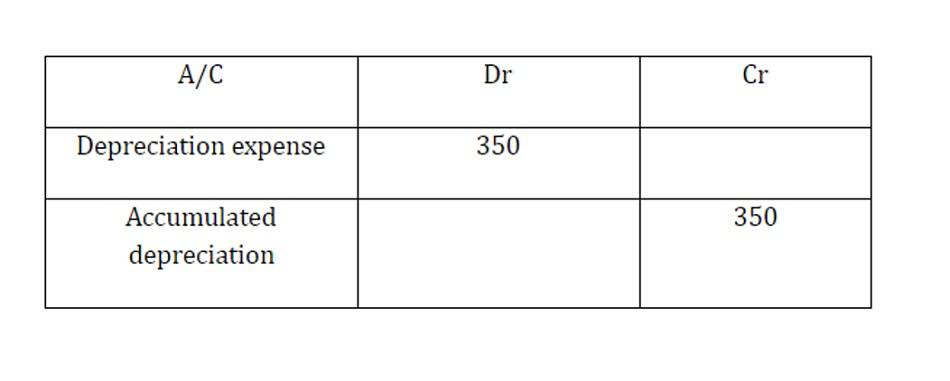
It offers a quick, no-frills answer to keeping your assets versus liabilities in balance. On the balance sheet, the assets side represents a company’s resources with positive economic utility, while the liabilities and shareholders equity side reflects the funding sources. Under the accrual basis of accounting, this account reports the cost of the temporary help services that a company used during the period indicated on its income statement. This is a contra owner’s equity account, because it has a debit balance if draws were made. Even though it is a balance sheet account, it is a temporary account. A long-term asset account reported on the balance sheet under the heading of property, plant, and equipment.

Bookkeeping

Almost all businesses use the double-entry accounting system because, truthfully, single-entry is outdated at this point. For example, if a business signs up for accounting software, it will automatically default to double-entry. A current asset whose ending balance should report the cost of a merchandiser’s products awaiting to be sold.

The Basic Accounting Equation

Since the gain is outside of the main activity of a business, it is reported as a nonoperating or other revenue on the company’s income statement. The amount of a long-term asset’s cost that has been allocated to Depreciation Expense since the time that the asset was acquired. An asset account is a general ledger account used to sort and store the debit and credit amounts from a company’s transactions involving the company’s resources. That part of the accounting system which contains the balance sheet and income statement accounts used for recording transactions. The totals tell us that as of midnight on December 6, the company had assets of $17,200. It also indicates the creditors provided $7,000 and the owner of the company provided $10,200.

Accounting Equation for a Corporation: Transactions C5–C6

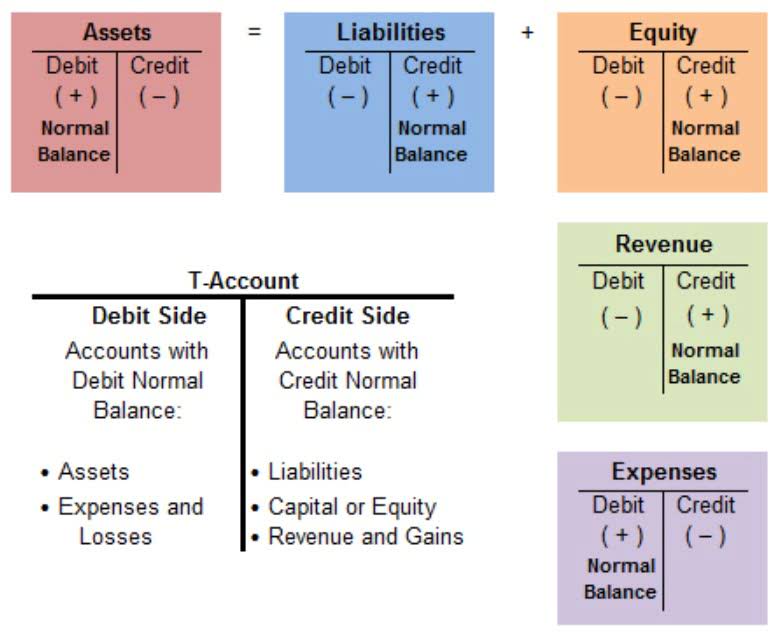
  • Debits and Credits are the words used to reflect this double-sided nature of financial transactions.
  • When a company purchases goods or services from other companies on credit, a payable is recorded to show that the company promises to pay the other companies for their assets.
  • Therefore, there is no expense (or revenue) to be reported on the income statement for the period of December 1-3.
  • You can interpret the amounts in the accounting equation to mean that ASC has assets of $10,000 and the source of those assets was the owner, J.
  • The inventory of a manufacturer should report the cost of its raw materials, work-in-process, and finished goods.
  • The accounting equation sets the foundation of “double-entry” accounting, since it shows a company’s asset purchases and how they were financed (i.e. the off-setting entries).

The accounting equation equates a company’s assets to its deferred revenue liabilities and equity. This shows all company assets are acquired by either debt or equity financing. For example, when a company is started, its assets are first purchased with either cash the company received from loans or cash the company received from investors. The accounting equation underpins the structure of the balance sheet, ensuring that every financial transaction is recorded accurately.

If a business buys raw materials and pays in cash, it will result in an increase in the company’s inventory (an asset) while reducing cash capital (another asset). Most of the time, the company doesn’t own its assets completely outright. For instance, the company might have a loan on the company car, a mortgage on the building, or even owe money to its shareholders. That is why the second part of the accounting equation is made up of the claims on company assets. This straightforward relationship between assets, liabilities, and equity is the foundation of the double-entry accounting system. That is, each entry made on the Debit side has a corresponding entry on the Credit side.

When a company records a business transaction, it is not recorded in the accounting equation, per se. Rather, transactions are recorded into specific accounts contained in the company’s general ledger. The accounts are designated as an asset, liability, owner’s equity, revenue, expense, gain, or loss account.

We also show how the same transaction will be recorded in the company’s general ledger accounts. Since ASC has not yet earned any revenues nor incurred any expenses, there are no amounts to be reported on an income statement. As you can see, assets equal the sum of liabilities and owner’s equity. This makes sense when you think about it because liabilities and equity are essentially just sources of funding for companies to purchase assets. In this form, it is easier to highlight the relationship between shareholder’s equity and debt (liabilities).

Accounting Equation for a Corporation: Transactions C7–C8

Under the accrual basis of accounting, revenues are recorded at the time of delivering the service or the merchandise, even if cash is not received at the time of delivery. The contra owner’s equity account used to record the current year’s withdrawals of business assets by the sole proprietor for personal use. It will be closed at the end of the year to the owner’s capital account. The totals now indicate that Accounting Software, Inc. has assets of $16,300. Viewed another way, the corporation has assets of $16,300 with the creditors having a claim of $7,000 and the stockholders having a residual claim of $9,300.

Accounting Equation for a Sole Proprietorship: Transactions 1-2

Therefore, you should always consult with accounting and tax professionals for assistance with your specific circumstances. The equation remains in balance thanks to the double-entry accounting (or bookkeeping) system. In Double-Entry Accounting, there are at least two sides to every financial transaction.

Owners can increase their ownership share by contributing money to the company or decrease equity by withdrawing company funds. A credit in contrast refers to a decrease in an asset or an increase in a liability or shareholders’ equity. This equation sets the foundation of double-entry accounting, also known as double-entry bookkeeping, and highlights the structure of the balance sheet. Double-entry accounting is a system where every transaction affects at least two accounts. Essentially, the representation equates all uses of capital (assets) to all sources of capital, where debt capital leads to liabilities and equity capital leads to shareholders’ equity.